Showing posts with label applique. Show all posts

Friday, February 8, 2019

How soon do good intentions go!

Well, after all that talking, I have done little since.  I am trying to concentrate on my health, so there is that!
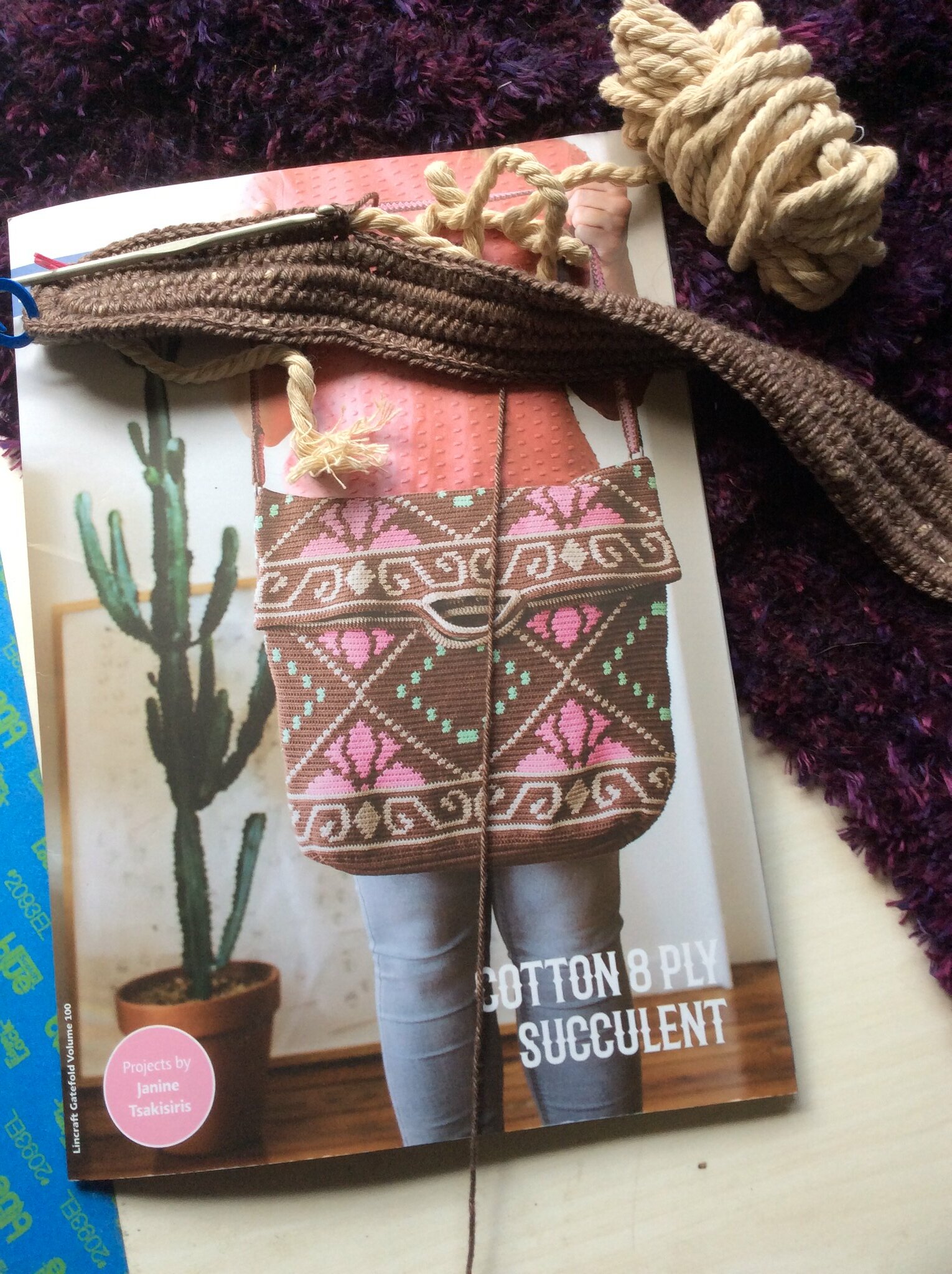
I started crocheting this bag.  It might take all winter!  (which isn't Here yet)
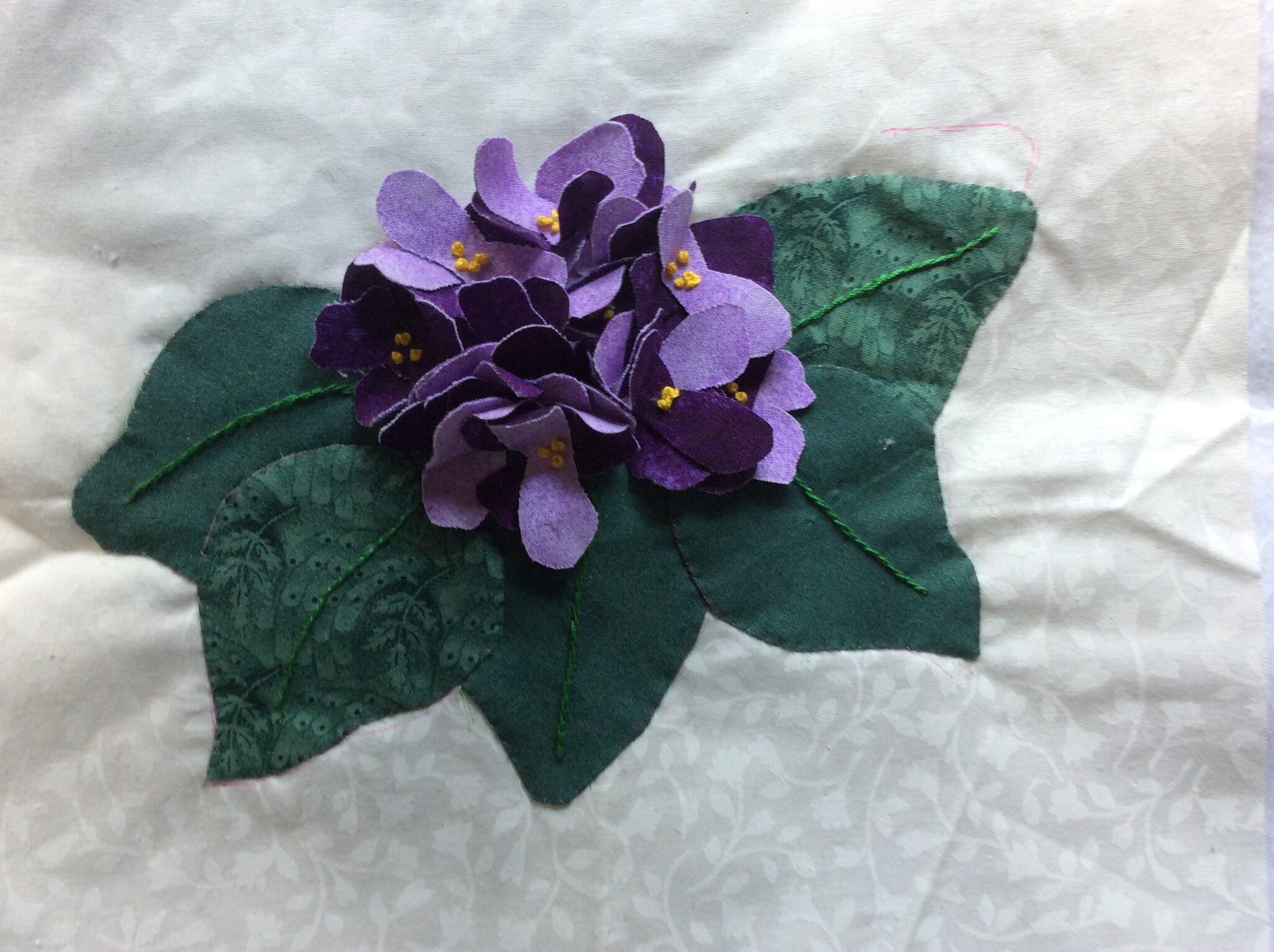
I finished this little applique with dimensional flowers.  It was a kit I bought a few years ago, for a wall hanging.  It will probably go onto our stall at the quit show in October.
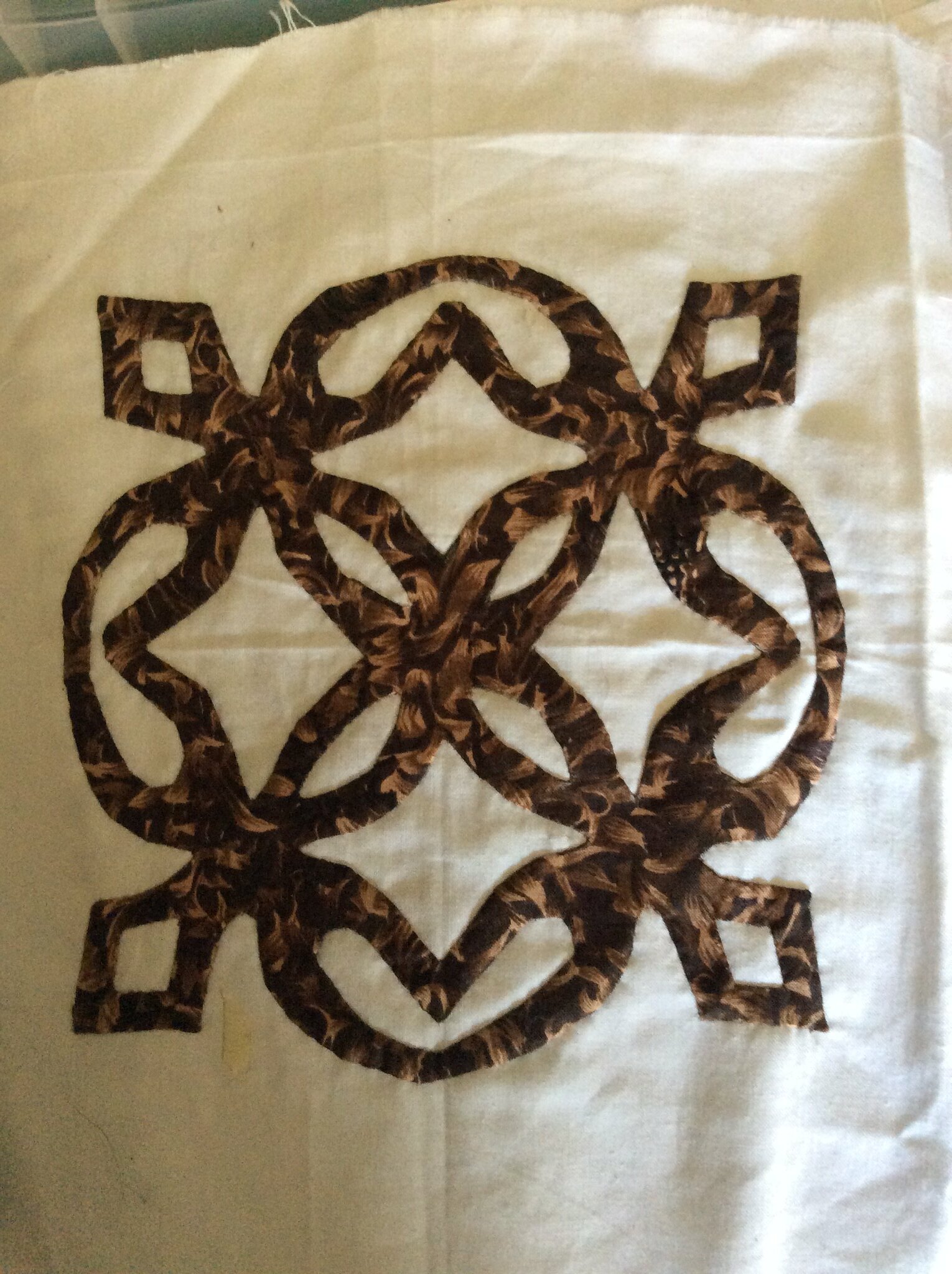
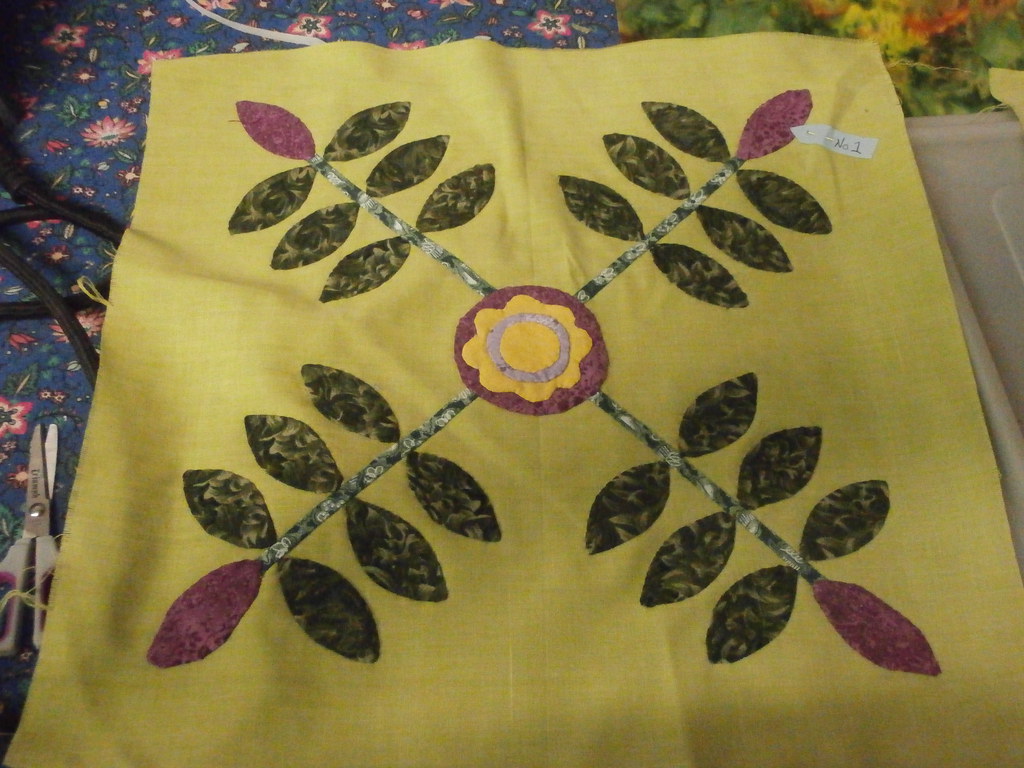
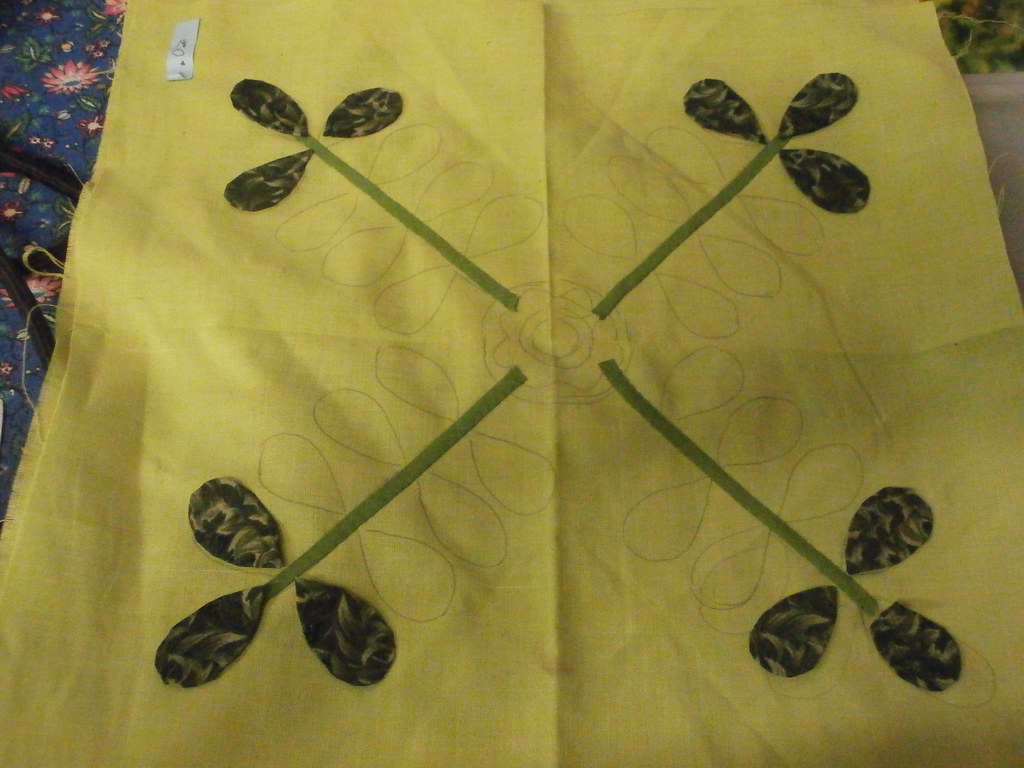
I also finished this backbasting applique block from an applique quilt that has been going for a few!!! years.
I do need to get drawing though.  Sktchy has brought back daily muses, so I need to catch up on that.  I start a new course on sktchy art school with Charlotte Hamilton,  and I have a few others that I should complete the work for.
I have also joined Ivy Newport's Studioworks community and am enjoying all the classes and inspiration, but not yet actually doing much.
So  what do I need to do?
I need to set up a computer in my art space, to motivate me to do more painting and drawing.
I need to observe the sktchy alarm and draw.
And I need to write here as often as I can.  Every day if possible!


Sunday, April 27, 2014

Being very productive

I have been tackling my steep learning curve with my new embroidery machine and am finding that it is quite easy to do two things at once!
This morning I spent a long time playing with drawing my own designs from scratch and after much hair pulling I have produced a very simple quilting outline (which is so simple, I am not going to show you), but I think I am now much more confident to go on producing my own, more complex ones.
This afternoon, whilst increasing the number of leaf blocks in my growing collection,  I have been doing a little hand applique.  At the quilt convention, a few weeks ago, I bought some 'Applique paper' (here,  scroll down to see the product below). Basically, it is a semi soluble, fusible interfacing which you can leave in, but allows you to turn the edges of your fabric with a gluestick.  Using it has speeded up my applique no end as I can put together the pieces whilst the embroidery machine is working away.
This is one of my completed blocks.  It is a Quilt Show block of the month from a few years ago and is something I pull out in winter to do on cold nights.
This is my current block, number seven (so you can see I have actually done a fair bit).  Whilst I embroidered one leaf, I finished turning lots of leaves.
All of these paler ones!  OOps, when I laid them out, I realised I had one missing.  I spent an hour looking for some of the same fabric unsuccessfully, then had to look through the rubbish and actually found the missing one.  Lucky the rubbish had not gone out!
You can see one unturned leaf at the top, so you can see I have ironed the applique paper on to a piece of fabric, then it is easy to turn the edges to the back with a glue stick.
Whilst I was embroidering another leaf this evening, I got all twelve darker leaves sewn down.
So my new toy is actually helping me to get more done - and I get to play with lots of glorious colours of thread!

Happy Creating!

Wednesday, November 30, 2011

WIP - Iris


Last week, I posted about an iris applique quilt I had started working on.  All I had done was dye the fabric and choose the picture.  I am a bit further along with this now.
This is the unfinished pastel painting I am going to use.  It is about  30 inches square.
As you can see in this photo, It is covered in acetate, which is what I use for pastel WIPs so they can be stacked and not get smudged.  I traced the main lines of the picture onto the acetate with a marker.
Then used the acetate as a master to trace a pattern on wide format paper.
This is my background fabric, which I have darkened a little at the top with pastel and textile medium.
I traced off each part of the iris separately and cut out the centre so I could audition and fussy cut the fabric.
Using these reverse templates, it was easy to find just the right area on the fabric.
It's very hard to see in this picture, but I traced along the inside of the templates with an iron off pen.
And then rough cut out the pieces.
I free cut some leaves and stems.
I cut my pieces out more carefully and glued them down with a glue stick (I find when I am thread painting, that a glue stick allows me to add more thread than I could if I used fusible web).
And that is where I am at!  Next stop thread painting.

Wednesday, September 21, 2011

Leafy fabric book - progress

As you  know if you have been checking in, I am working on a little fabric book based on a leaf theme  (which is my current work theme).
As it has been a while, I thought I would give you an update on where the pages are at.
I have shown this one before, it just needs a little adjustment.
This one is basically finished, now, except, I think I may go over the word "fern"  in a contrasting colour.
This one is a bit further along.  I have defined the blue tree with some free motion, and now I think I see some yellow grassor bushes under it.  I also found these fish bone leaf danglies which I will embellish with some blue and gold thread.
My wrapped leaves have found a new backing, which suits them better, but I am still dithering over my next steps here.
So, instead of dithering, I just went on to some new pages until the muse strikes.  This one was inspired by the circle, which I have blanket stitched on.  The sequins are a bit lost, although I think their shape and arrangement are good.  I did try stitching on them with green (top left), but it just wasn't enough contrast.  I think I will paint them with pale green gesso. Although I do like the pearly sheen, it doesn't work here.
This page uses some pressed fern leaves my mother gave me.  I liked the three sizes.  They are glued beneath a piece of tulle, which is attached with gold brads.  I will be stitching the leaves down and trimming the tulle with wave blade scissors or pinking shears.
This is a very simple page with lovely fabric and a little gold embellishment.
This one uses a bit of nylon lace curtain in a whorl.

This last one uses some little leaf charms I found with fabric shadows.  Not sure where this one will go.

So there is a peek at where I am at, but of course, if you know me, a peek is not much help, because it is just the tip of the iceberg, since I am into anything and everything vaguely to do with fibres and textiles.  My hubby says he has no idea what I am upto from one minute to the next, but he is exactly the same with his craft.  Two peas in a pod.


Friday, April 1, 2011

Burned fabrics

I thought I would experiment a little with my heat tool and see what I come up with.  There are lots of places to go for information on burning textiles, but my favourites are Kim Thittichai's Hot Textiles and Quilting Arts Magazine.
Here are a selection of synthetic, from lace, to felt, to lame'
Below, I have traced around a motif in some lace with the straight tip on the heat tool.  It creates a sealed edge that can be appliqued without fraying.

You can trace/cut around quite complicated motifs this way.


It works extremely well on Lutradur.

This lame' frays very easily, but  the shape burned out will not fray.

The same is true for this satin.
You can also use some of the other heads to emboss, or burn patterns into fabric.  This works really well on velvet. Above tou can see a flat circular head and a nine patch sort of head.  If you want to emboss instead of burn you need to be able to lower the heat on your tool.

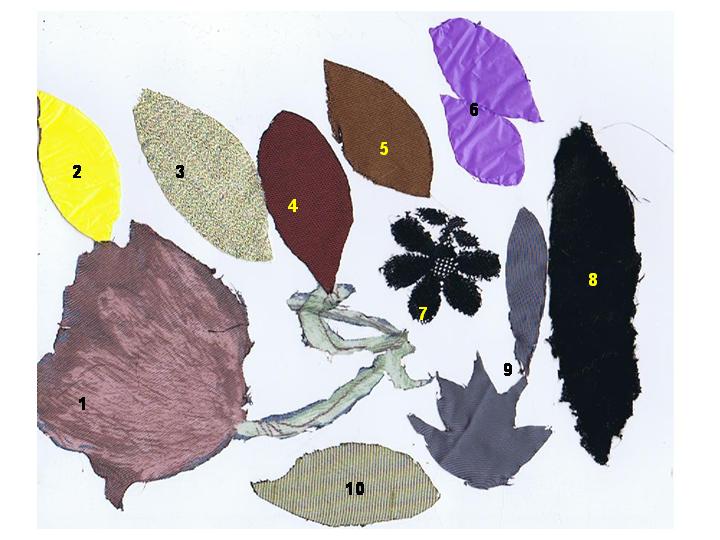
Here are some applique leaves and motifs cut out.
  1. from very thin chifon/organza
  2. from plastic garbage bags
  3. lame
  4. a shot satin
  5. silk
  6. several layers og garbage bag plastic (seals them together)
  7. Lace
  8. crushed velvet
  9. satin
  10. an embossed satin

Using the circular head on plastic at a hot heat, then layering two colours
 Cutting out bubble wrap then melting the bubbles over a foil base


In these two lutradur samples, I have cut out a design with the straight tool, and burned with the shape tools.
In this satin sample, the melted fabric made strands as I pulled the tool away.  I definitely need to repeat this.
In this lutradur sample layered over a purple background, the left circles went totally through, whilst the right citcles only went halfway forming a fine lace.  I liked that.
In these to samples I was experimenting with getting the leaf to stitck to the fabric underneath.  It wasonly a partial success.
These two are embossed crushed velvet.  because the velvet was black, It is very hard to see the embossing here, but it is very visible when looking at it in reality.

Here I have both fully burned and partially burned lame.  The sample on the right is burning lame onto felt, which requires a higher heat to melt

If you look carefully, you can see the embossed circle on this shot satin.

Lame and organza on felt.
Here is the large lace motif burned out.
These textured satins were perfect for cutting geometrics out.  This would be a great addition to some cut work.
These two examples on black silk (which also needs a higher heat) were some scraps of fused fabrics I had.  I was not sure if it was a good idea to use them, but I am glad I did.  Since these were sheers, I put a little angelina between the two layers, I wanted to see if I could trap the angelina in between.  It worked, but I also discovered something else.

If the top fabric has fusible on the back, when you burn around it, you also fuse it to the background (so long as the background has a higher melting point).  Wow!  I found this such and exciting discovery that I tried a lot of fused fabrics on some brocade (below).

  1.  grey satin
  2. green garbag plastic
  3. white metallic organza
  4. textured satin
  5. loose weave organza
  6. velvet ribbon
  7. lutradur
Now let's see who is thinking out there.  There is no way I could have ironed the fusible on to some of these fabrics, so how did I do it?
I simply put a piece of fusible larger than the shape (without the paper backing), between the two layers before I burned the line and it worked! So not only does this fuse the fabrics to the background, you don't have to iron any fusing first.
I would not trust this to be permanent, since the fusing is only a fine line, but for me it was a great discovery.
Using this method, you could have beautiful synthetic appliques (which are usually fiddly because the fabric is slippery, and can't be fused because the fabric will melt).  The appliques would easily stay in place for stitching, and because the fusible is not ironed in the centre, they would stay soft.
I will have to experiment with washing after stitching to see what happens to the unironed fusible, but my guess is it is so fine, it would not bea problem.
WOW - I feel like shouting Eureka!   I am most certainly going to use this in my secret activity that I told you I would tell you about soon.
Did you hear that girls?  Here's my first technique.

So excited.  No quote today
Oh and I got the book I won from workshop on the web yesterday

I am really enjoying reading it and looking forward to doing the free online tutorials that go with it.
Vicki